Rent vs Buy Equipment: Why Renting from Jon’s Rental Makes Sense in Texas
For contractors, builders, landscapers — or even homeowners tackling a big job — deciding whether to rent or buy equipment can have major financial and practical consequences. Equipment like skid-steers, backhoes, mini-excavators, trencher systems, and specialty tools carry high price tags, but also high maintenance, operating costs, and storage burdens.
At Jon’s Rental, we believe renting often makes far more sense than purchasing — especially in Texas, where project timelines, soil types, weather conditions, and job-site demands vary dramatically. Renting gives you flexibility, lowers overhead, and keeps your cash flow healthy.
1. Save Big Upfront — Avoid the Heavy Cost of Ownership
Buying heavy equipment means upfront capital. Even “small” machines can cost tens of thousands of dollars. Beyond purchase, you’re committing to maintenance, repairs, storage, insurance, and depreciation over years. That cost adds up fast — and can eat profits on smaller or sporadic jobs.
Renting from Jon’s Rental transforms that cost into a predictable, manageable expense. You pay only for the time you need the equipment — whether it’s one day, a week, or a month — and return it when you’re done. No long-term debt, no storage fees, and no surprise breakdowns. For many contractors, that cash-flow flexibility is a game-changer.
2. Stay Flexible — Rent Only What You Need, When You Need It
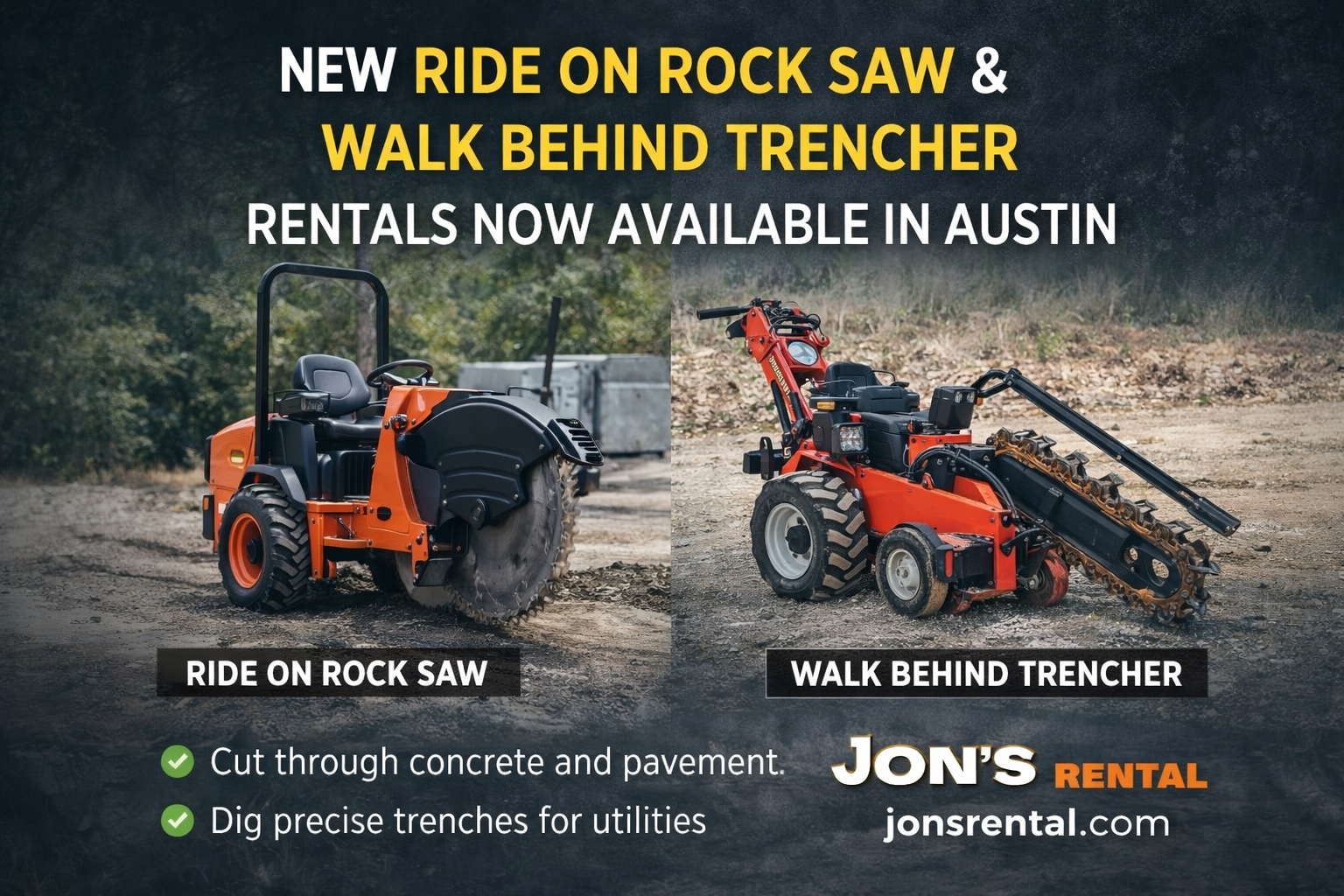
Project requirements change. Soil conditions shift. Timelines stretch or accelerate. Buying locks you into one set of tools. Renting lets you adapt. Need a trencher this week, a skid-steer next month, a dump trailer later? Just rent what fits the job — no need to maintain a full fleet.
This flexibility is especially valuable for companies or homeowners working on varied jobs — landscaping one week, demolition the next, irrigation after that. Renting avoids under-utilization and wasteful equipment sitting idle.
3. No Maintenance, No Storage, No Depreciation Headaches
Owning equipment means ongoing care. Oils, filters, tires, hydraulics, repairs — they add time, money, and risk. Not to mention storing large machines when they are not in use. Bad storage or long-term idling can cause damage or depreciation.
With Jon’s Rental, you never worry about maintenance or depreciation. We handle inspections, repairs, and storage. You get a ready-to-go piece of equipment delivered when you need it — and return it when you’re done. It’s that simple.
4. Get Access to a Wide Range of Updated Equipment
Another benefit of renting: access to the latest tools and machines — without investing thousands. Newer equipment tends to be more efficient, safer, and better maintained. From compact loaders to specialized attachments, renting offers you a buffet of options for each job. You only pay for what you use.
5. Ideal for Short-Term or Intermittent Projects
If your business or home improvements involve seasonal work, short-term projects, or occasional jobs — owning equipment full-time doesn’t make financial sense. Renting is ideal in those scenarios. It reduces overhead, and gives you scalability without long-term commitment.
6. Avoid Long-Term Liabilities & Unexpected Costs
Owning heavy equipment comes with liability — breakdowns, insurance, downtime, breakdown scheduling, parts, storage, resale value. Renting shifts that burden to Jon’s Rental. If a machine fails or needs maintenance, we handle it, ensuring your project stays on schedule and budget stays intact.
7. Safer, More Reliable Outcomes With Inspected, Maintained Machines
At Jon’s Rental, all machines are inspected, maintained, and readied before each rental. You’re not risking a job-site shutdown due to equipment failure — you get quality, reliability, and peace of mind. That’s especially critical on tight schedules or high-stakes projects.
8. Better Cash Flow Management — Preserve Capital for Other Essentials
When you buy big equipment, you tie up significant capital. That’s money you can’t use for payroll, materials, permits, or growth. Renting keeps your capital flexible. You invest only when needed — perfect for growing businesses or projects with variable budgets.
9. Try Before You Invest — Test Equipment Before You Buy
Renting allows you to “test drive” different equipment types and brands without committing. Maybe a compact loader works great in one soil type but not another. Or you find a certain trencher attachment works best for your needs. Renting first helps you make an informed purchase decision — or decide renting is all you need.
10. Environmental & Storage Benefits — Less Waste, Fewer Idle Machines
Owning unused equipment often means machines sit idle — causing unnecessary emissions, wear, and storage space. Renting reduces idle equipment, reduces environmental impact, and leads to more efficient utilization of resources.
When Buying Might Still Make Sense — And How to Decide
We’re not saying renting is always best. For high-frequency businesses — for example, landscaping companies doing daily jobs, or contractors running continuous projects — owning can make sense. But that only applies if you’re using the equipment near-constantly and committed to maintenance, storage, and upkeep.
Before buying, ask yourself:
- Will I use this machine several times per month? Per week? Per job?
- Can I store, maintain, and insure it properly?
- Do I expect job volume to stay consistent long-term?
If the answer is no, renting remains the smarter, safer, cost-efficient choice — and that’s where Jon’s Rental shines.
Conclusion: Renting Is Often the Smarter Choice — Let Jon’s Rental Do the Heavy Lifting
Whether you’re a contractor, landscaper, DIY-minded homeowner or seasonal worker — renting equipment from Jon’s Rental gives flexibility, cost savings, reliability, and peace of mind. You avoid the burdens of ownership, only pay for what you need, and stay ready for any job.
If you’re ready to get started — contact Jon’s Rental today. We have the machines, the service, and the commitment to help you get the job done right — without wasting money, time, or resources.